Treatment GuideJust DiagnosedSex & DatingAfrican AmericanStigmaAsk the HIV DocPrEP En EspañolNewsVoicesPrint IssueVideoOut 100
CONTACTCAREER OPPORTUNITIESADVERTISE WITH USPRIVACY POLICYPRIVACY PREFERENCESTERMS OF USELEGAL NOTICE
© 2026 Pride Publishing Inc.
All Rights reserved
All Rights reserved

By continuing to use our site, you agree to our Privacy Policy and Terms of Use.

Last year brought the introduction of two vaccines. Interestingly, they are like bookends on the adult life span. One prevents human papillomavirus and is for women and girls younger than 26. The other prevents shingles and is for people over 60. For everyone in between, there have been changes in the standard recommendations for immunizations. So we are going to look at what to do with the new vaccines and update information on the old vaccines. You should review your immunization status with your health care provider every year. When patients are first diagnosed with HIV, it is standard to update all missing immunizations. Often many years have passed since they were last received, and a patient's immunization records can be difficult to find. Some vaccines need to be repeated periodically, and others fade over time, requiring the levels of antibody response to be checked. Either way, it's important to keep up to date. Hepatitis B. It is now recommended that the double dose (40 micrograms) be used for all HIVers. This is the dose found in Recombivax but not Engerix, which has 20 micrograms. If you have been previously vaccinated, find out if you had your hepatitis B surface antibodies checked. If they were present, you are OK regardless of which vaccine was used. If they are absent, you should be revaccinated with the complete three-shot series of the higher dose. In this case, testing for hepatitis B surface antibodies should be quantitative, where a level over 10 indicates immunity. Standard commercial laboratory testing, which reports results simply as 'present' or 'absent,' can miss low-level antibodies that are still fully protective. Also consider rechecking the antibody levels if the last check was more than seven to 10 years earlier, since levels can fade over time. Finally, note that Twinrix, which contains both hepatitis A and B vaccines, uses the lower dose for hepatitis B. It should no longer be used for HIVers. Tetanus. There's a new tetanus booster that contains protection against pertussis (whooping cough) in addition to tetanus and diphtheria. Since there are still scattered cases of whooping cough around, it is recommended that all adults receive this formulation. Normally, tetanus is boosted every 10 years'or after five years if there has been a deep wound. If you get a cut, you need to get a booster within 72 hours. It is safe to get the new tetanus booster if your last regular tetanus shot was more than two years earlier. Shingles. The new vaccine for shingles (varicella zoster) is indicated for people over 60. However, it is a live-virus vaccine. Therefore, it should not be given to anyone who is HIV-positive. Also, anyone who gets the vaccine can shed active virus and should have minimal contact with any HIVer for two weeks. As a reminder, all this is also true for the chickenpox vaccine, another live varicella zoster vaccine. HPV. This vaccine has been tested only on women and is recommended for 9- to 26-year-olds. It prevents four strains of HPV that cause 70% of cervical cancer and 90% of genital warts in women. There is no live virus, so it is safe to use in HIV-positive women. Trials are under way in men. Pneumococcus. This vaccine prevents a common community-acquired pneumonia that often complicates other respiratory infections and is potentially fatal. This vaccine should be boosted once after five years. However, the response to the vaccine is reduced if a patient's CD4-cell count is below 200. If this is the case, then revaccination can occur sooner, when CD4 cells are over 200. Or the initial vaccine can be postponed until antiretrovirals are started and the CD4 count climbs above 200. These vaccines should keep you healthy at home, but if you are going to be traveling this summer, I have more recommendations coming in the next issue.


From our Sponsors
Most Popular

Newly diagnosed with HIV? Advocates share their best advice for seeking treatment
April 29 2026 3:32 PM
Plus: Featured Video
Latest Stories

A new HIV diagnosis doesn't have to be nerve-wracking. Advocates share their advice
July 30 2026 12:01 PM

How to find an HIV-competent healthcare provider, according to advocates
May 19 2026 4:55 PM
Can a single infusion of immune cells suppress HIV for years?
May 11 2026 11:39 AM


National HIV advocacy group's CEO rejects claims of crisis
April 21 2026 5:14 PM


Beyond awareness: How youth leadership is reshaping the HIV response
April 10 2026 9:12 AM

Saving public health? AIDS United's new CEO has a plan
March 23 2026 9:48 AM
Struggling with daily HIV meds? Monthly shots may be the answer
March 20 2026 7:12 AM

Did you know over half of HIV-positive people in the world are female?
March 09 2026 6:47 PM
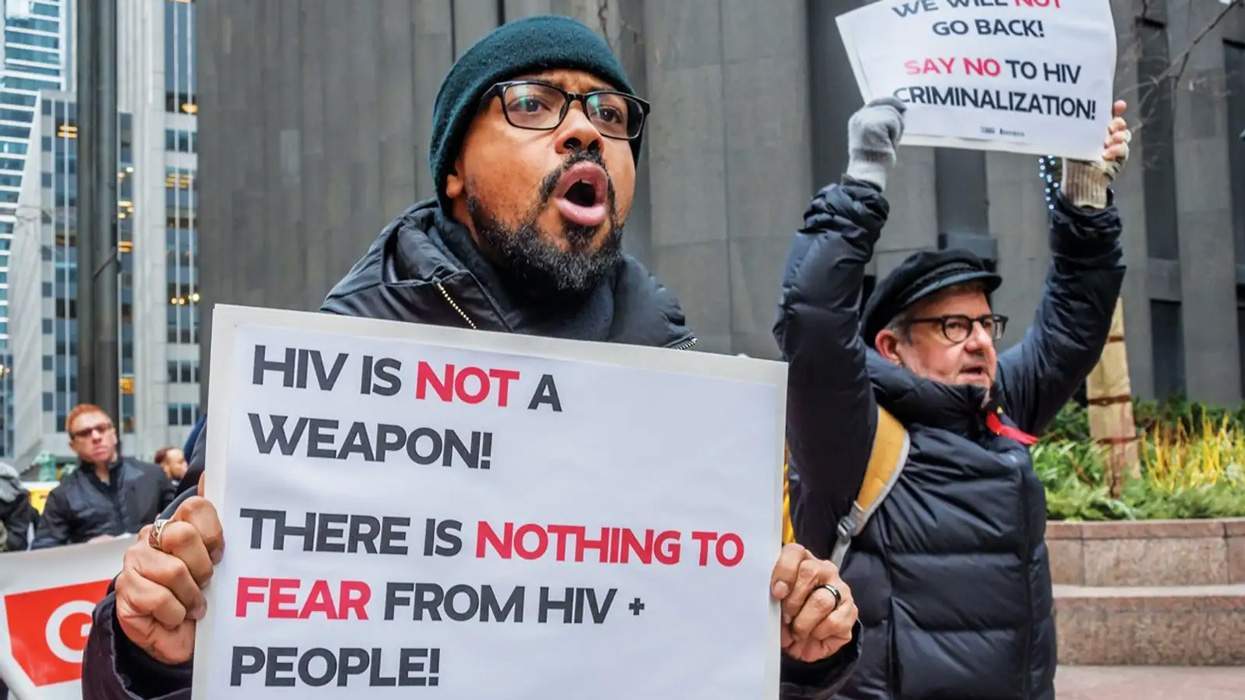
Why are Black people still the most affected by HIV criminalization?
February 27 2026 8:44 PM

What to know about HIV testing and treatment if you’re Black and LGBTQ+
February 24 2026 9:04 AM

6 Black activists who changed the HIV/AIDS response in America
February 09 2026 9:55 AM

National Black HIV/AIDS Awareness Day: a time for action on many fronts
February 07 2026 3:49 PM
Black Americans are disproportionately criminalized for living with HIV. Here's how
February 06 2026 4:26 PM
13 Black community organizations fighting HIV in the U.S. you should know
February 03 2026 10:45 AM

Meet the activist who wants people living with HIV to know they’re still sexy
January 28 2026 10:02 AM

An HIV breakthrough is here. Let's not let it go to waste
January 21 2026 12:40 PM


HIV-positive men stage 'Kiss-In' protest at U.S.-Mexico border
December 01 2025 12:56 PM
Trending stories















Recommended Stories for You