September 14 2010 6:08 PM EST
Treatment GuideJust DiagnosedSex & DatingAfrican AmericanStigmaAsk the HIV DocPrEP En EspañolNewsVoicesPrint IssueVideoOut 100
CONTACTCAREER OPPORTUNITIESADVERTISE WITH USPRIVACY POLICYPRIVACY PREFERENCESTERMS OF USELEGAL NOTICE
© 2026 Pride Publishing Inc.
All Rights reserved
All Rights reserved
By continuing to use our site, you agree to our Privacy Policy and Terms of Use.
During trials of preventive HIV vaccines, trial participants may develop HIV-related antibody responses that could lead to a positive HIV test by routine antibody detection methods (called vaccine-induced seropositivity/reactivity), and the potential for false-positive test results and an incorrect HIV diagnosis, according to a study in the July 21 issue of the Journal of the American Medical Association, a theme issue on HIV.
Lindsey R. Baden, MD, of Brigham and Women's Hospital and Harvard Medical School, Boston, presented the findings of the study at a JAMA media briefing at the International AIDS conference in Vienna.
"With an estimated 7,500 new human immunodeficiency virus infections occurring each day worldwide, there is an urgent need to develop an effective prophylactic HIV vaccine. Over the past 20 years many potential vaccine candidates have been developed and assessed in human clinical trials in more than 30,000 participants."
The researchers add that induction of protective anti-HIV immune responses is the goal of an HIV vaccine. However, this may cause a reactive result in routine HIV testing in the absence of HIV infection, and has the potential of confounding factors that can improperly skew outcomes interpretation of HIV tests because of the antibody induced by vaccination. "Participants in early phase clinical trials, who are typically at low risk of HIV infection," the continue, "may encounter difficulties with obtaining medical or disability/life insurance, donating blood or organs, employment, and immigration owing to a false-positive HIV test result."
Baden and colleagues assessed the occurrence of vaccine-induced seropositivity, or VISP, associated with different vaccine delivery systems and HIV inserts studied by the HIV Vaccine Trials Network. Three common U.S. Food and Drug Administration-approved enzyme immunoassay HIV antibody kits were used to determine VISP, and a routine diagnostic HIV algorithm was used to evaluate VISP frequency in healthy, HIV-seronegative adults who completed phase I and phase IIa vaccine trials conducted from 2000 to 2010 in the United States, South America, Thailand, and Africa. The majority of participants (82%) in the analysis were from the United States.
VISP occurred in 908 of 2,176 participants (41.7%). Rates of VISP varied greatly by type of HIV vaccine administered. For poxvirus products given alone or as a boost to a DNA or poxvirus prime, 53.4% (295 of 552) of recipients had VISP; 86.7% (399 of 460) of adenovirus 5 product recipients developed VISP, as did 35 of 555 (6.3%) of DNA-alone product recipients.
Overall, the proportion of VISP among the various HIV testing kits tested ranged from about 41% to 9%. The researchers also found that among the 901 participants with VISP and a Western blot result (a technique in molecular biology, used to separate and identify proteins), 92 (10.2%) had a positive result, 592 (65.7%) tested indeterminate, and 217 (24.1%) tested negative; however, the distribution of results varied by product.
"These data demonstrate that VISP is a common but highly variable outcome of trials of preventive HIV vaccines," the authors write. "Because participants with VISP may subsequently become infected with HIV, it is imperative that appropriate follow-up testing be conducted, including HIV RNA testing, to minimize potential misinterpretation of HIV test results."
"Testing for VISP at the end of the study and providing participants with their VISP status is critically important to prevent social harms, incorrect HIV diagnosis, and inaccurate reporting to health agencies. A misinterpretation of VISP can be minimized by clinicians obtaining a complete patient history (e.g., participation in an HIV vaccine trial) and interpretation of the Western blot and HIV RNA."


From our Sponsors
Most Popular

Newly diagnosed with HIV? Advocates share their best advice for seeking treatment
April 29 2026 3:32 PM
Plus: Featured Video
Latest Stories

A new HIV diagnosis doesn't have to be nerve-wracking. Advocates share their advice
July 30 2026 12:01 PM

How to find an HIV-competent healthcare provider, according to advocates
May 19 2026 4:55 PM
Can a single infusion of immune cells suppress HIV for years?
May 11 2026 11:39 AM


National HIV advocacy group's CEO rejects claims of crisis
April 21 2026 5:14 PM


Beyond awareness: How youth leadership is reshaping the HIV response
April 10 2026 9:12 AM

Saving public health? AIDS United's new CEO has a plan
March 23 2026 9:48 AM
Struggling with daily HIV meds? Monthly shots may be the answer
March 20 2026 7:12 AM

Did you know over half of HIV-positive people in the world are female?
March 09 2026 6:47 PM
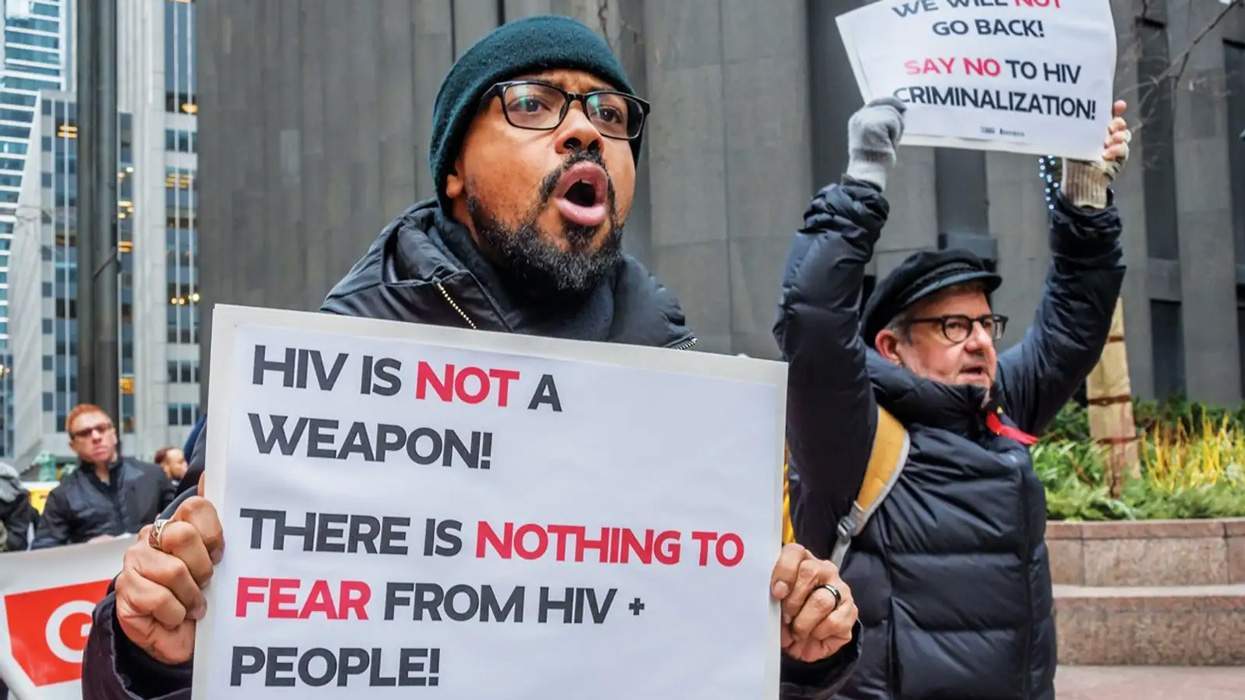
Why are Black people still the most affected by HIV criminalization?
February 27 2026 8:44 PM

What to know about HIV testing and treatment if you’re Black and LGBTQ+
February 24 2026 9:04 AM

6 Black activists who changed the HIV/AIDS response in America
February 09 2026 9:55 AM

National Black HIV/AIDS Awareness Day: a time for action on many fronts
February 07 2026 3:49 PM
Black Americans are disproportionately criminalized for living with HIV. Here's how
February 06 2026 4:26 PM
13 Black community organizations fighting HIV in the U.S. you should know
February 03 2026 10:45 AM

Meet the activist who wants people living with HIV to know they’re still sexy
January 28 2026 10:02 AM

An HIV breakthrough is here. Let's not let it go to waste
January 21 2026 12:40 PM


HIV-positive men stage 'Kiss-In' protest at U.S.-Mexico border
December 01 2025 12:56 PM
Trending stories













Recommended Stories for You