Long-term Survivors
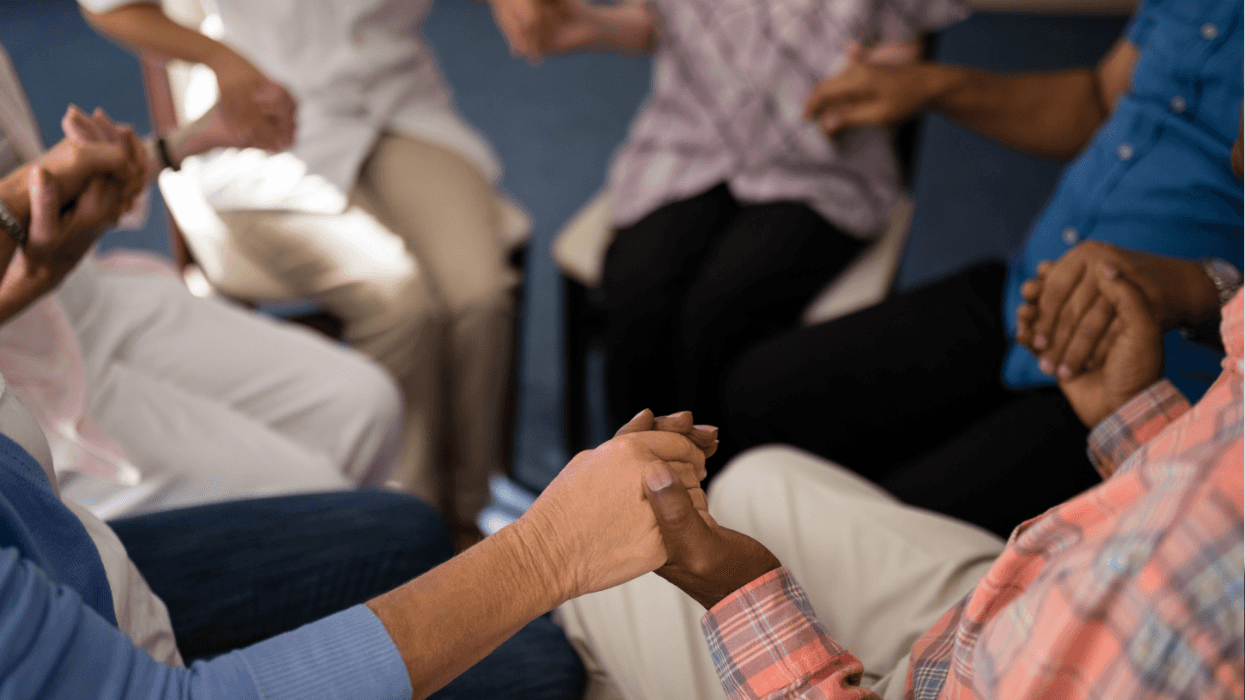
Cancer-Coaching Grandmothers Hold Hands, Lift Spirits

These therapies can help people cope, not just with cancer, but HIV as well.
November 01 2017 4:22 PM EST

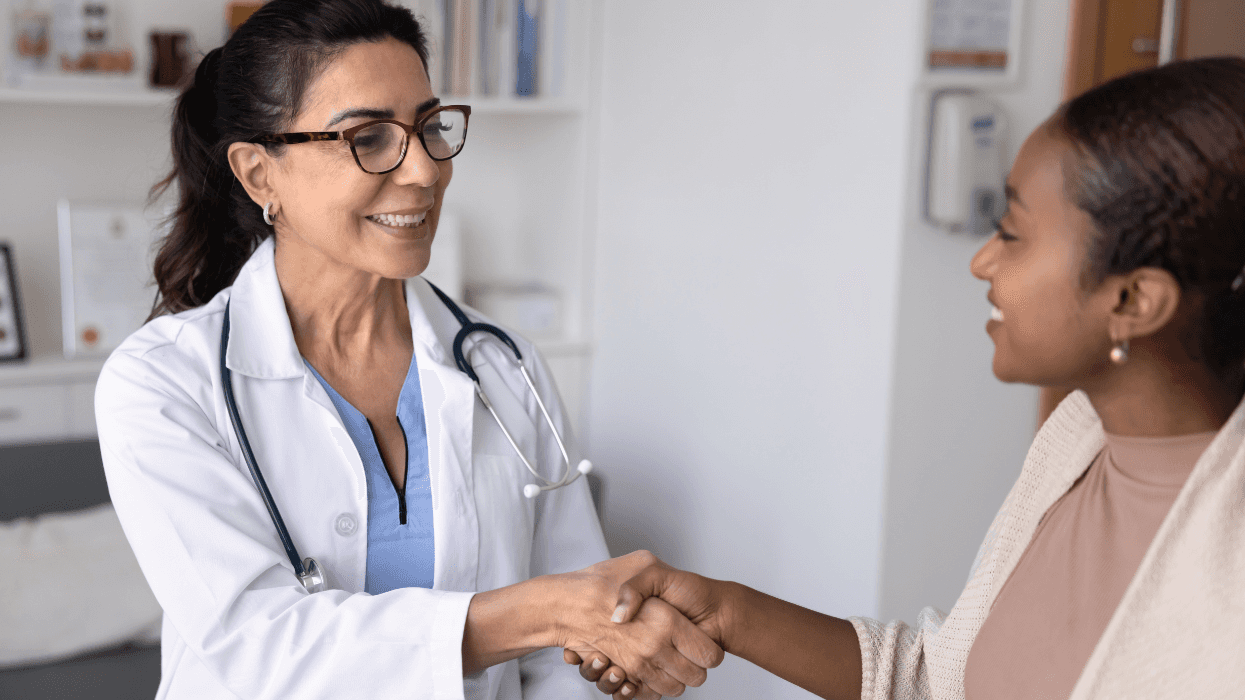
When a new friend threatened to cancel her mastectomy, Ella Jones’ mothering instincts kicked in. “I went over to the bed, and I rubbed her and talked to her, and explained in general terms what was going to happen,” said Jones. “If she had gotten up out of that bed and left, she would have never done any treatment.”Jones, a nine-year breast cancer survivor, is one of several women who coaches others through their treatment. The program is run by The Breakfast Club, a St. Louis nonprofit that supports African-American women diagnosed with breast cancer. The coaches, or “buddies,” receive a small stipend to be a mentor, friend and guide to women undergoing treatment and follow-up care. Jones tags along to doctor’s appointments, sits next to patients during chemotherapy and checks in with the women she cares for by phone. Sometimes, if a patient is waiting on test results and feeling upset, they just go to lunch.One in eight U.S. women will develop breast cancer over the course of her life. But the burden is particularly heavy for African-American women. Like Hispanic women, they are more likely to be diagnosed with aggressive forms of breast cancer and at a later stage than their white counterparts.
Research has indicated the need for culturally-competent support for cancer survivors and caregivers in the African-American community. And groups — such as the national organization Sisters Network and local organizations like The Breakfast Club — have responded by providing peer support to black women with breast cancer and their families. “The buddy program is not just emotional and psychological support,” said Dr. Lannis Hall, a clinical oncologist in suburban St. Louis who also sits on the Breakfast Club’s board. “They know the resources to help them get insurance, or support for bras and prostheses, for transportation. They’re excellent in helping them navigate a really difficult arena of health care.”Although black and white women are screened for mammograms at roughly the same rate, black women are less likely to finish the recommended treatment for breast cancer, Hall said, citing a 2015 study from the University of Washington. Doctors say they aren't sure why this happens. “Is it because they have socio-economic stressors that make it difficult for them to complete treatment? Is it because they’re refusing treatment? Is it because they’re not offered treatment? It’s not clear,” said Hall. “I don’t think it’s neglect. For a lot of women, I think it's fear.”But having a network of women who can share advice and support helps fill that gap.In St. Louis, the buddies meet with each other once a month.
At a recent meeting at Eloise Crayton’s house north of the city, she served pink lemonade while the group went over logistics for a weekend mammogram drive at a church — one of 20 they’ll visit this year for the Breakfast Club’s Faith On the Move program.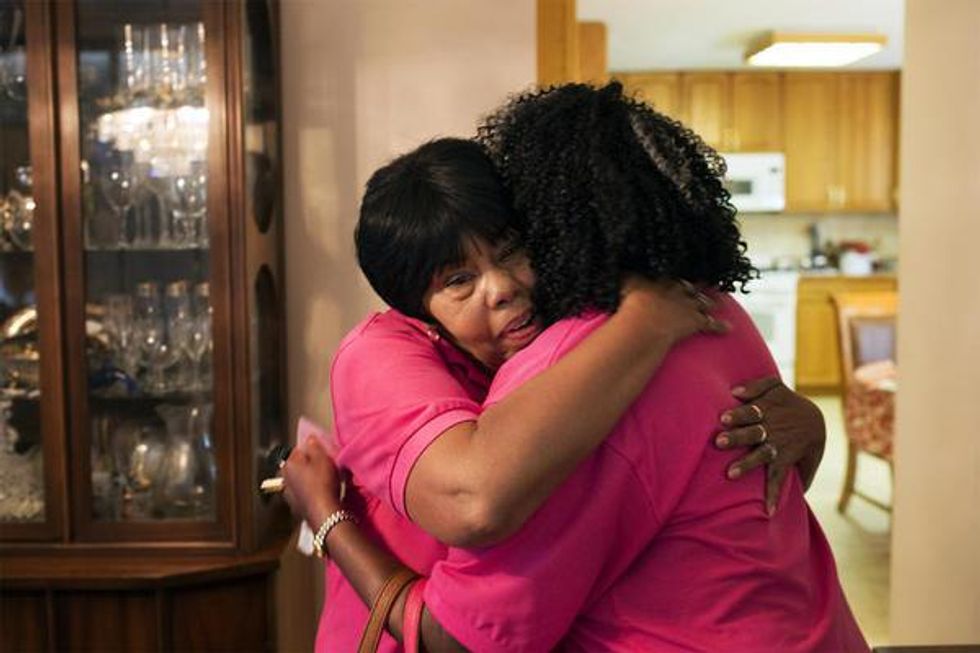 Buddies visit beauty shops, retirement homes and health fairs to spread their message. They'll also attend the Breakfast Club’s larger monthly support meetings. “Wherever there’s anybody that will listen to our story, that’s where our ladies go,” Crayton said.Crayton came up with the buddy program 10 years ago. Most of its $40,000 in operating costs comes from grants awarded by cancer advocacy groups. Patients are referred to the program by hospitals, relatives and friends. Now, the program serves 40 to 50 women a year — and there’s no waiting list. One of the benefits is that a buddy can answer the questions that a doctor might not be able to. “[Like] how many weeks did you have to take off work, or how was your level of pain?” said Sha Fields, a 10-year cancer survivor.Other times, a woman might have a more personal question — such as what her chest will look like after a breast reconstruction. It's a surgery that Fields has had herself. “If they’re considering, I’ll let ‘em see,” Fields said. “I think it’s important.”Another buddy, Janette Bordeaux, is a soft-spoken, U.S. Postal Service retiree. She went through breast cancer treatment 17 years ago. Today, she’s a guide for six women who were recently diagnosed.Every other week, she takes a healthy cooking class at Centennial Christian Church in north St. Louis with Adrienne Gaines, one of her buddies. Last winter, Gaines found a lump under her arm. She had a mastectomy in February.“You only get to stay in the hospital, for a day and a half, two days if you’re lucky. So you come home with all these questions,” Gaines said. “And the tubes! And you don’t know what to do with all these things!”
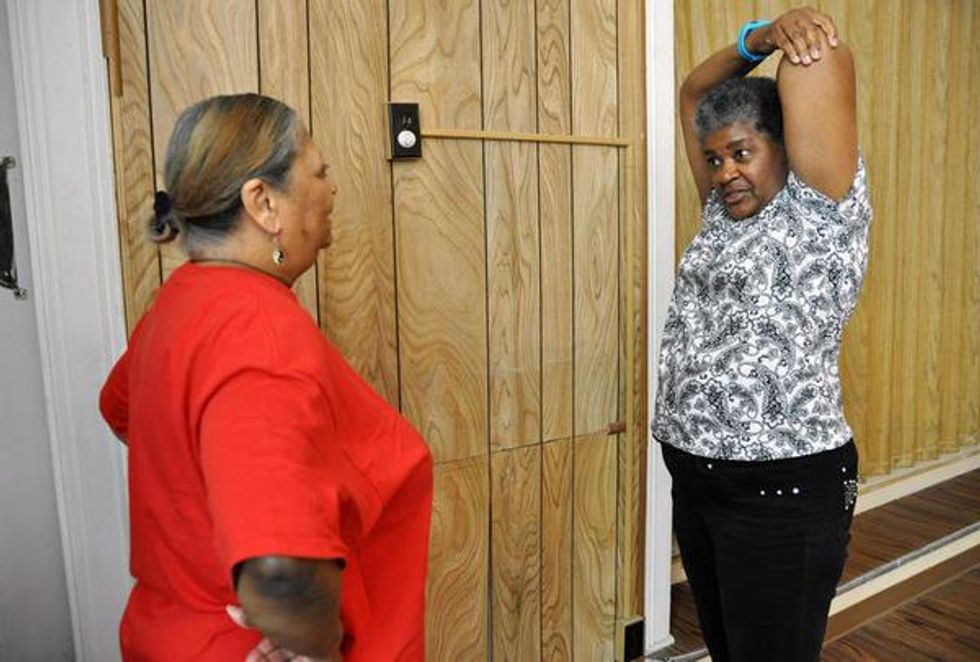 After her surgery, Gaines was hesitant to receive visitors. But Bordeaux’s kind demeanor worked its magic and the two connected immediately. They sat in the kitchen and talked for talked for hours, Gaines recalls, and Bordeaux also took the time to answer her husband’s questions.“ He was really scared. He does the macho thing, but he was really scared.” Gaines said. “But we were able, finally, to take this deep breath, and say wow — somebody understands. ”Bordeaux taught her how to exercise after her surgery, so she could lift her arms again. Before follow-up appointments, she gave Gaines questions to ask her doctor. Sometimes Bordeaux calls out of the blue, to ask how she’s doing.“That was probably a life saver for me. I’m very emotional about it,” Gaines said tearfully.“Going through that ordeal, you just can’t talk to anybody.”
Follow Durrie on Twitter: @durrieBLara Hamdan contributed to this report.This story was produced by a partnership between St. Louis Public Radio and Side Effects Public Media.